February is Teen Dating Violence Awareness Month.

Teen Dating Violence Awareness Month is a national effort to raise awareness and protect teens from violence.

Dating abuse is a pattern of destructive behaviors used to exert power and control over a dating partner. While we define dating violence as a pattern, that doesn’t mean the first instance of abuse is not dating violence. It just recognizes that dating violence usually involves a series of abusive behaviors over a period of time.

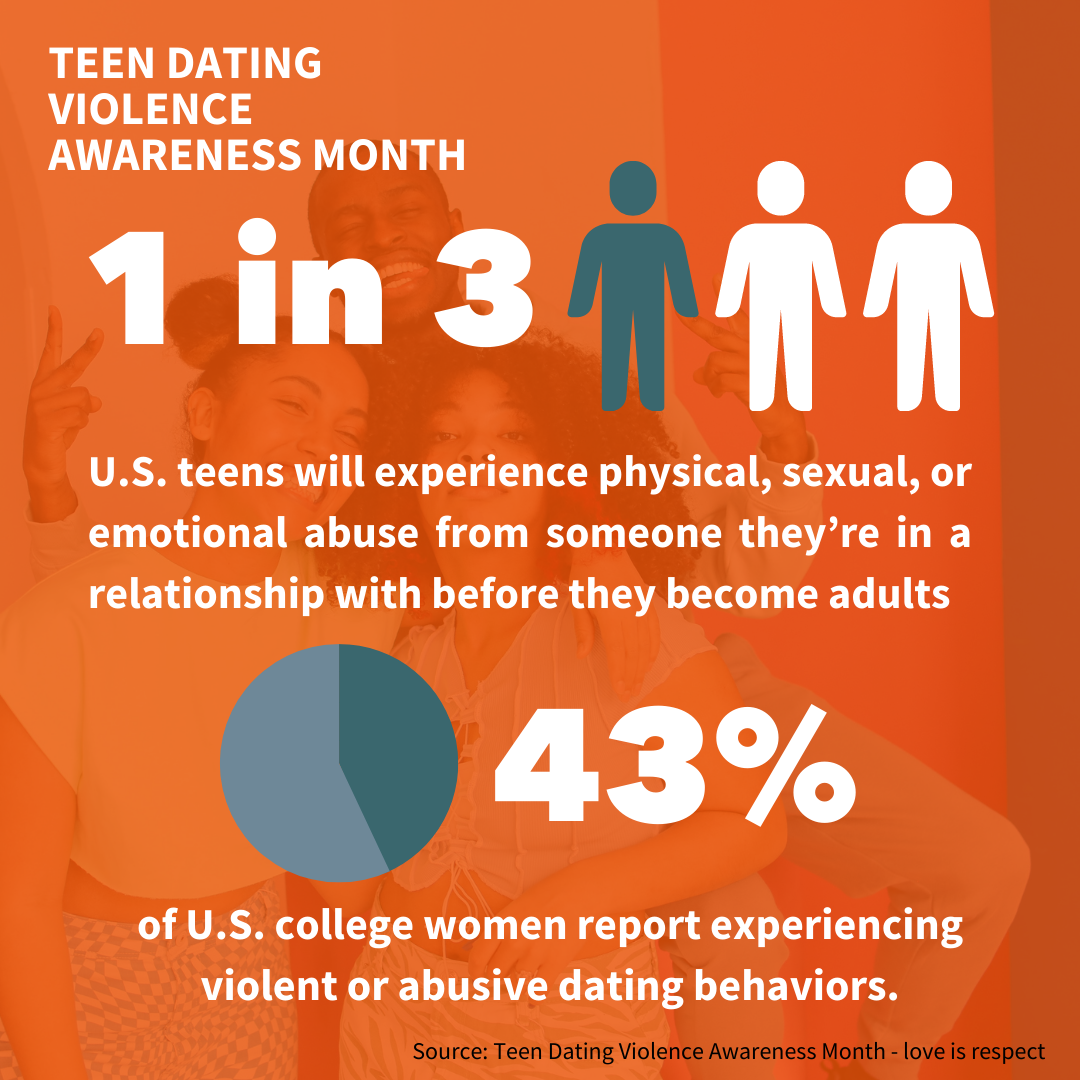
Teen dating violence is more common than many people think. One in three teens in the U.S. will experience physical, sexual, or emotional abuse by someone they are in a relationship with before they become adults. And nearly half (43%) of college women report experiencing violent and abusive dating behaviors.

What is Teen Dating Violence?

Teen dating violence — also called intimate relationship violence or intimate partner violence among adolescents or adolescent relationship abuse — includes physical, psychological or sexual abuse; harassment; or stalking of any person ages 12 to 18 in the context of a past or present romantic or consensual relationship.

Source

Types of Teen Dating Violence

Teen dating violence can be done in person or, with the explosion of social media and telecommunication, electronically. Social media is a hotbed of violent and abusive activity, especially for teenagers who are new to relationships and unsure of how to handle their feelings most appropriately.

  • Physical Abuse: hitting, biting, shoving, hair pulling, scratching;
  • Emotional or Psychological Abuse: name calling, bullying, shaming, intentionally embarrassing, constant monitoring;
  • Sexual Abuse: forcing a teen partner to engage in a sexual act against or without their consent;
  • Stalking: Repeatedly following or harassing a teen partner in a way that causes them reasonable fear for their safety or well-being.

Source

Why Does Teen Dating Violence Happen?

One in three teenagers – nearly 1.5 Million – in a romantic relationship admits to being in an unhealthy relationship. While both boys and girls can be victims of teen dating violence, girls are far more likely to suffer. Nearly 25% of teenage girls are estimated to have been in an abusive relationship. In fact, girls between 16 and 24 are three times as likely than any other demographic to be abused by a boyfriend or other intimate partner.

Once a milestone reserved for high schoolers, romantic relationships have slowly begun to bloom earlier in teens’ lives, sometimes as early as the age of 12 or 13. Teens (and in some cases pre-teens) are still developing critical emotional and mental maturities that place them at a disadvantage in dealing with the stresses of a romantic relationship. This leads to an increase in the number of relationships that go south. Teenage romantic relationships are more likely to turn violent when:

  • Teens are not mature enough to communicate their feelings to their romantic partners;
  • Teens to not understand how to communicate effectively with their romantic partners;
  • Teens are depressed or suffer from anxiety or other emotional problems;
  • Teens are pressured into behaving in ways they ordinarily wouldn’t by their peers; or
  • Drugs or alcohol are introduced.

Source

Consequences of Teen Dating Violence

Teens involved in unhealthy or abusive relationships are more likely to suffer from debilitating or limiting long-term consequences. These include:

  • Depression;
  • Anxiety;
  • Aggression;
  • Alcoholism or drug abuse;
  • Anorexia or bulimia;
  • Thoughts of suicide; and
  • Sexually Transmitted Diseases.

Teens who are in violent or abusive relationships are also more likely to be in unhealthy or abusive relationships later in life. Many domestic abusers report having been sexually, physically, or emotionally abused as a child or teenager. Additionally, a teenager who commits teen dating violence may also face serious criminal consequences.

Source

Preventing Teen Dating Violence

Teenagers aren’t always the most forthcoming with authority figures, so it is important to encourage open and free communication. Many victims of teen dating violence do not seek assistance or guidance because they are embarrassed, afraid of the repercussions from parents, or fearful of what their peers will think. Talking to teens – and making sure both boys and girls understand the importance of trust, respect, and honesty in relationships – can help to lay a foundation for intimate relationships. Encourage teens to speak to adults with whom they have an admiration and trust.

If teens are afraid of punishment from their parents they may not speak out when in need. Encourage a line of communication that doesn’t have strings or punishments attached. Abuse in teenage relationships can cause serious problems down the road, so it is incredibly important to leave lines of communication open to stop issues before they may start.

Source

Select Language