
This Domestic Violence Awareness Month, YWCA NorthEastern NY recognizes that young people are facing unique challenges related to unhealthy relationships, digital abuse, and systemic violence. Their voices often go unheard, yet they are leading powerful movements for accountability, healing, and change. These actions can erode trust, invade privacy, and cause emotional trauma. Educating youth about healthy boundaries and consent can help prevent abuse and foster healthy relationships.
This October, through storytelling, education, and advocacy, we’re elevating youth perspectives, fostering dialogue, and empowering the next generation to create a future free from gender-based violence
Your gift not only helps us empower our youth through our domestic violence support services and teen and youth violence prevention programming. It helps us answer the 24/7 crisis hotline when it rings.
It helps us open the door to safe shelter in the middle of the night.
It helps us provide counseling, court advocacy, and the unwavering reminder: You are not alone.
Domestic violence doesn’t end without action. It takes a community. It takes you.
UPCOMING EVENTS
Songs for Safety: Karaoke Kick-Off
October 7th, 2026
6:00pm
Frog Alley Brewing Company
108 State Street
Schenectady, NY 12305
A vibrant high-energy night featuring music, raffles, outreach, and community connection.
Free admission to public.
Take Back the Night March
(TBTN)
October 15th, 2026
5:30pm – 7:00pm
A powerful call to action where survivors and allies gather to reclaim space and demand an end to violence.
We will gather for a brief program from 5:30-6 with moving speakers before we march through the streets led by YW team members in our ‘2-4-6-8 No more violence, no more hate’ chants along with others!
Free to the public.
Empowerment Breakfast
October 29th, 2026
9:00am – 11:30am
The Edison Club
891 Riverview Rd
Rexford, NY 12148
The Things We Don’t See:
A Closer Look at Intimate Partner Violence
What happens behind closed doors isn’t always what it seems.
GET INVOLVED
Support the cause:
Become a community supporter or sponsor of Domestic Violence Awareness Month. Make a donation or contact Lauren Trunko, Chief Development Officer, at 518.374.3394 x105 to find out more about how YOU can make a difference!
Help us raise awareness:
Share posts directly from YWCA NENY’s social media pages throughout the month of October and make sure you use the hashtags #ywcaneny, #WWV26, and #DVAM2026.
INFORMATION ON DOMESTIC VIOLENCE
What is Domestic Violence?
Domestic violence is a pattern of abusive behavior in any relationship that is used by one partner to gain or maintain power and control over another intimate partner. Domestic violence can be physical, sexual, emotional, economic, psychological, or technological actions or threats of actions or other patterns of coercive behavior that influence another person within an intimate partner relationship. This includes any behaviors that intimidate, manipulate, humiliate, isolate, frighten, terrorize, coerce, threaten, blame, hurt, injure, or wound someone.
Domestic violence can happen to anyone regardless of race, age, sexual orientation, religion, sex, or gender identity. Domestic violence affects people of all socioeconomic backgrounds and education levels. Domestic violence occurs in both opposite-sex and same-sex relationships and can happen to intimate partners who are married, living together, dating, or share a child.
Domestic violence not only affects those who are abused, but also has a substantial effect on family members, friends, co-workers, other witnesses, and the community at large. Children, who grow up witnessing domestic violence, are among those seriously affected by this crime. Frequent exposure to violence in the home not only predisposes children to numerous social and physical problems, but also teaches them that violence is a normal way of life – therefore, increasing their risk of becoming society’s next generation of victims and abusers.
This discussion of domestic violence is intended to educate the public about the dynamics of abuse in intimate partner relationships, as well as to help victims understand their experience and family and friends of victims to recognize signs of abuse in the relationships of their loved ones. The Violence Against Women Act contains a definition of domestic violence that governs the programs funded under the Act. The discussion here does not alter the definition in VAWA.
Source: https://www.justice.gov/ovw/domestic-violence
Types of Domestic Violence
Domestic violence can be physical, sexual, emotional, economic, psychological, or technological actions or threats of actions or other patterns of coercive behavior that influence another person within an intimate partner relationship. Here are some of the most common examples:
Examples of physical abuse:
- Hitting
- Slapping
- Shoving
- Grabbing
- Pinching
- Biting
- Hair pulling, etc.
This type of abuse also includes denying a partner medical care or forcing alcohol and/or drug use upon him or her.
Examples of sexual abuse:
Coercing or attempting to coerce any sexual contact or behavior without consent, including but not limited to:
- Marital rape
- Attacks on sexual parts of the body
- Forcing sex after physical violence has occurred
- Treating one in a sexually demeaning manner
Examples of emotional abuse:
Undermining an individual’s sense of self-worth and/or self-esteem is abusive. Includes but is not limited to:
- Diminishing one’s abilities
- Name-calling
- Damaging one’s relationship with his or her children.
Examples of economic abuse:
Controlling or restraining a person’s ability to acquire, use, or maintain economic resources to which they are entitled. This includes:
- Using coercion, fraud, or manipulation to restrict a person’s access to money, assets, credit, or financial information
- Unfairly using a person’s personal economic resources, including money, assets, and credit, or exerting undue influence over a person’s financial and economic behavior or decisions including: forcing default on joint or other financial obligations
- exploiting powers of attorney
- guardianship, or conservatorship
- failing or neglecting to act in the best interests of a person to whom one has a fiduciary duty
Examples of psychological abuse:
- Causing fear by intimidation
- Threatening physical harm to self, partner, children, or partner’s family or friends
- Destruction of pets and property
- Forcing isolation from family, friends, or school and/or work.
Examples of technological abuse:
An act or pattern of behavior that is intended to harm, threaten, control, stalk, harass, impersonate, exploit, extort, or monitor another person that occurs using any form of technology, including but not limited to:
- Internet enabled devices
- Online spaces and platforms
- Computers, mobile devices, cameras and imaging programs
- Apps, location tracking devices, or communication technologies
- Any other emerging technologies
Source: http://justice.gov/ovw/domestic-violence
If you feel as if you are experiencing abuse of any kind including but not limited to the above situations, please call our 24/7 Domestic Violence Hotline at 518-374-3386.
Obtaining an Order of Protection
Petitioning for an Order
Contact YWCA NorthEastern NY at 518-374-3394 and press ‘0’ to connect with our front desk. Indicate you are seeking an Order of Protection and you will be connected with an advocate who will help you draft and file a petition for an OOP in Virtual Court. If you are asked to leave a message, someone will respond to your call shortly. Please leave a safe contact number for an advocate to get in touch with you.
Upon reaching us, you’ll be given the option to connect with an advocate via phone or by any other face time media. Together, you will draft the petition and the advocate will then e-file it through remote portal or instruct you on how to file it independently.
Please click one of the below links to download the petition. They can also be found by following the instructions below.
8-2 Family Offense Petition Word Document
8-2 Family Offense Petition PDF
If you are going to file yourself you can go to: http://ww2.nycourts.gov/forms/familycourt/index.shtml
On the left hand side of the web page, there is a list of options. Click on “Family Offense”. Scroll down to 8-2 Petition (Family offense) and click on the word document. Once completed, the form can be printed and mailed or faxed to Schenectady County Family Court. Petitions can be filed until 4:00PM Monday through Friday.
Mailing Address: Schenectady County Family Court, 620 State Street, Schenectady, NY 12305
Fax Number: 518-393-1565
After Filing the Petition
On the same business day that your YWCA NENY advocate files your petition, the Court will contact you with details on when your case will be heard. This typically happens within a few hours of filing. Make sure to keep your phone close all day to avoid missing the call.
During this phone call, you will be given a specific time for your hearing.
Please contact your YWCA NENY advocate to inform them of the court hearing.
Serving the Order
Once the judge issues the Temporary Order of Protection (TOP), you will receive a copy of the order by both mail and via email. PLEASE REMEMBER: The TOP must be physically served to your abuser for it to be valid. If your abuser does not have notice of the fact that you filed a temporary order of protection against them, they can’t be arrested for violating it!
You may register to be notified when your Order of Protection is served at https://oopalert.ny.gov/oopalert/
**Please check back daily with updates as this information may change based on COVID-19 restrictions and how that impacts our staff as well as the county courts.**
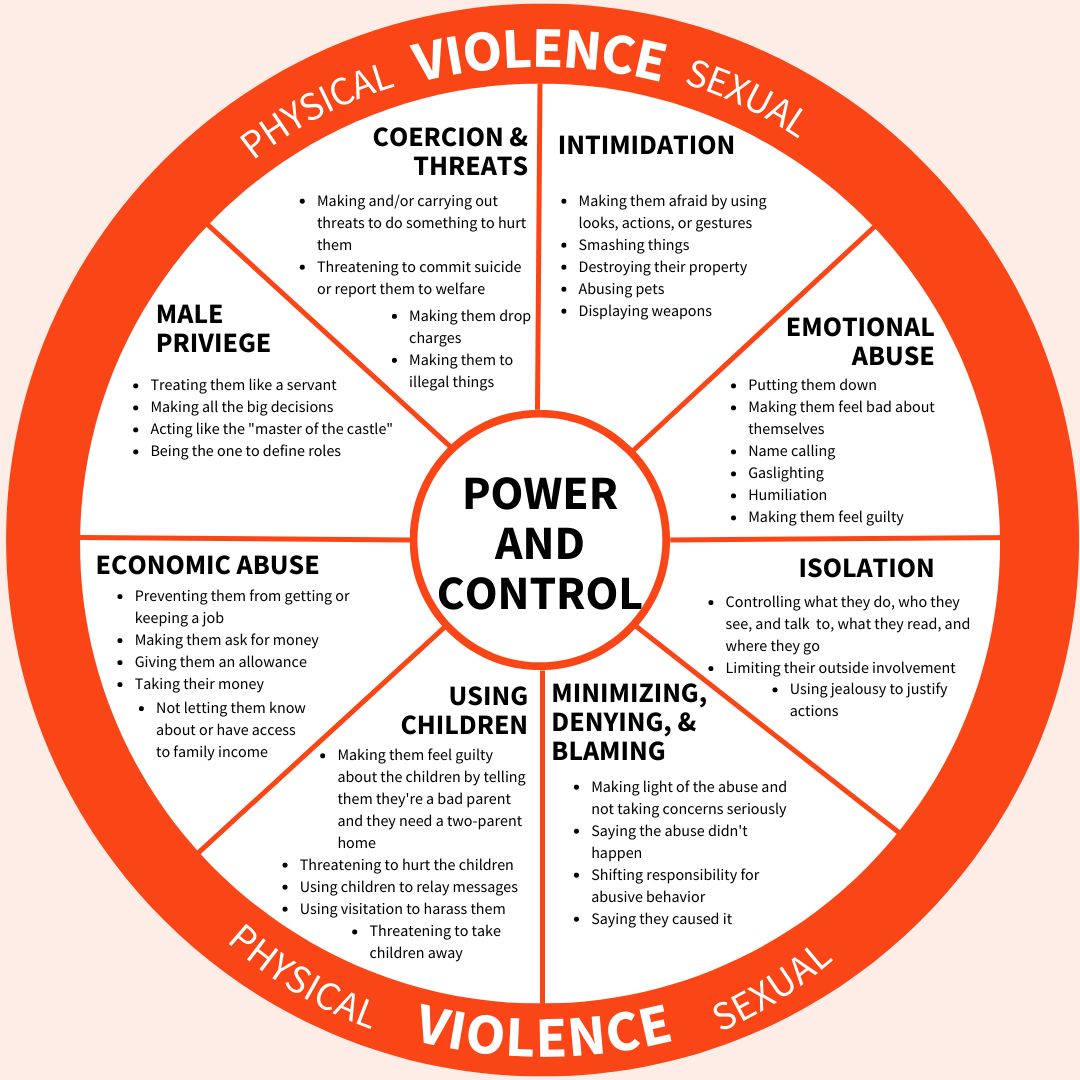
Domestic Violence Power and Control Wheel